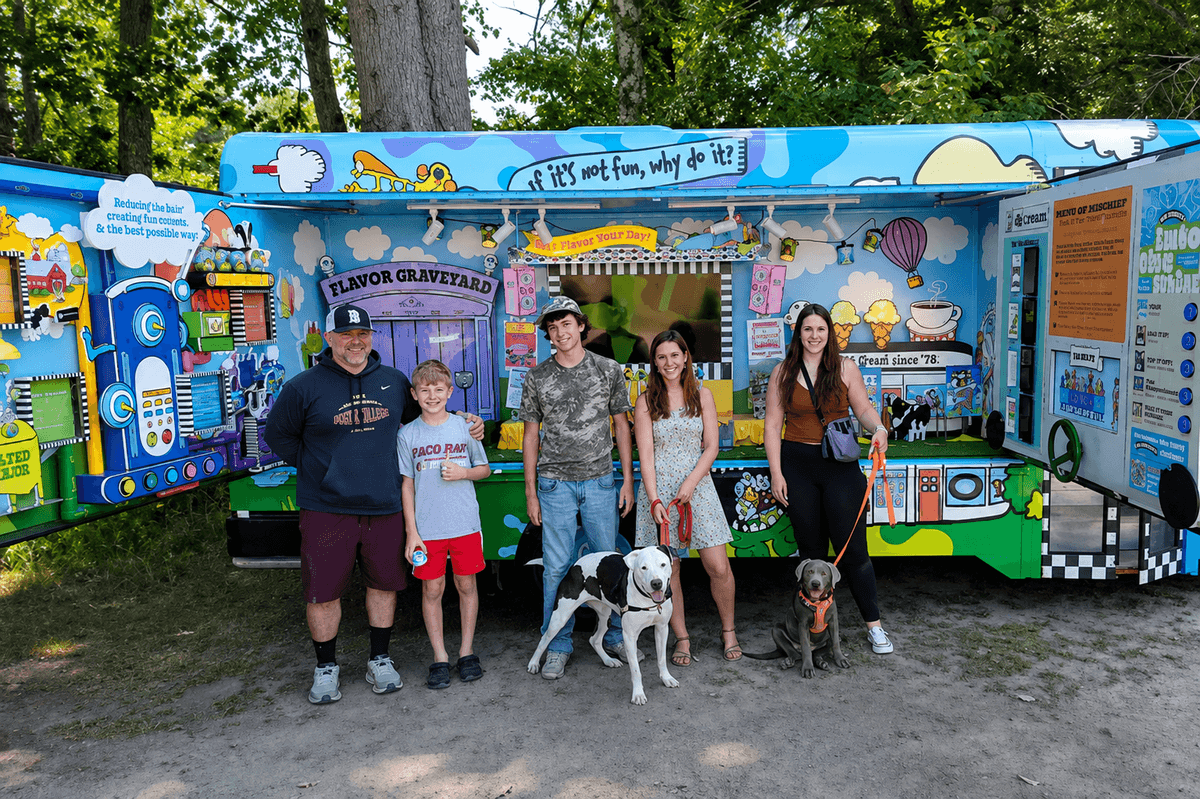
A great mobile tour vehicle does more than get you from Point A to Point B. It becomes the face of the campaign, a rolling billboard, a storage solution, an activation footprint, and sometimes even the activation itself.
At Trigger(House, we've sourced, modified, and deployed everything from Broncos and pickup trucks to specialty utility vehicles and custom-built mobile experiences. Along the way, we've learned that finding the right vehicle isn't about buying the coolest thing on four wheels—it's about finding the right tool for the job.
Here are five considerations that can make or break a mobile tour before it ever hits the road.
1. Start with the Brand, Not the Vehicle
One of the biggest mistakes brands make is starting their search with a vehicle instead of an objective.
Before looking at makes, models, or modifications, ask a simpler question: What story is this vehicle supposed to tell?
The vehicle should feel like a natural extension of the brand. A rugged pickup truck sends a very different message than a sleek EV, vintage van, or utility vehicle.
"The vibe the client is trying to create is one of the biggest factors," says Kerri Mahoney, Account Director at Trigger(House. "For Sun Cruiser, we used a Bronco because it matched the brand's personality. For other programs, we've used trucks or specialty vehicles that fit the audience and the experience we were trying to create."
Sometimes the answer is even driven by existing brand partnerships. According to Trigger(House Fabrication Manager Sashi Lyford, manufacturer affiliations can play a significant role in vehicle selection.
"If a client has an existing relationship with a specific automotive brand, that can immediately narrow the field. The vehicle itself becomes part of the brand story."
The best tour vehicles don't just transport the experience—they help communicate it.
2. Think Beyond Today’s Activation
The right vehicle for one event may be the wrong vehicle for an entire tour.
When evaluating options, it's important to think through every market, venue type, and activation environment the vehicle will encounter over its lifespan.
Another critical consideration is how the experience will actually be deployed. A vehicle built for a rapid-fire retail or sampling tour may be completely different from one designed to serve as a centerpiece at a multi-day festival.
If the goal is to hit multiple locations in a single day, speed and efficiency become paramount. Smaller vehicles are often easier to park, navigate, and deploy, allowing teams to maximize stops and minimize setup time. On the other hand, if the vehicle will serve as a week-long festival anchor, larger platforms can deliver greater visual impact, accommodate more equipment, and support higher consumer throughput.
Size comes with tradeoffs, however. Larger vehicles can introduce additional permitting, parking, and Department of Transportation (DOT) considerations, while also limiting where the experience can physically operate. Smaller vehicles offer greater flexibility and mobility but may restrict storage and capacity.
"The more you understand where the vehicle is going and how it'll be used, the better decisions you can make upfront," says Mahoney. "A vehicle that's perfect for a festival may not be the right choice for a tour making five stops a day."
Will it need to operate at festivals? Sporting events? Urban street activations? Snow-covered parking lots? Beaches? College campuses?
A vehicle that looks great in renderings may become a challenge once the realities of touring set in.
"The more you understand where the vehicle is going and how it'll be used, the better decisions you can make upfront," says Mahoney.
Long-term flexibility often matters more than short-term aesthetics.
3. Prioritize Customization Potential
The best mobile tours are increasingly self-contained.
Brands want vehicles that can arrive, deploy quickly, engage consumers, and get back on the road without requiring hours of setup and teardown.
That means evaluating not only how a vehicle looks, but what it can become.
Can it support fabrication modifications? Can it house refrigeration, storage, product sampling, AV equipment, or interactive elements? Can it safely support experiential features without compromising mobility?
A recent Trigger(House project involved transforming an electrician's bucket truck into a mobile brand experience complete with a DJ platform and consumer engagement elements.
"The goal is always to make the vehicle as self-contained as possible," says Mahoney. "You want consumers to engage with the experience while keeping everything integrated into the vehicle itself. That reduces setup time and makes touring significantly more efficient."
According to Lyford, choosing a platform with readily available aftermarket parts and modification options can save substantial time and budget during fabrication.
"We look closely at reliability, ease of modification, and what's available off the shelf to help us build exactly what the client is envisioning."
4. Reliability Beats Novelty Every Time
The most creative tour concept in the world won't matter if the vehicle is stuck on the side of the highway.
Reliability should be one of the first filters in any sourcing process—not an afterthought.
Multi-city tours create wear and tear quickly. Vehicles may travel thousands of miles, encounter multiple climates, and operate under demanding schedules.
While unique or uncommon vehicles can be visually compelling, they often come with sourcing challenges, maintenance headaches, and longer repair timelines.
"We always look at reliability," says Lyford. "The vehicle has to support the program operationally. If it's difficult to maintain or repair, that can create problems down the road."
The coolest vehicle in the parking lot isn't always the smartest investment.
5. Be Extremely Careful When Buying Used
Used vehicles can offer tremendous value—but they can also hide expensive surprises.
Both the operations and fabrication teams at Trigger(House have seen firsthand how seemingly great deals can become costly problems after purchase.
"A used vehicle might look fantastic on the outside," says Mahoney. "But once you start opening up floors, walls, and structural elements, you can uncover issues like water damage, mold, or years of deferred maintenance. And mold equals dollar signs."
Private sales can be particularly risky.
"Private sales can be a little dicey, especially with larger or more specialized vehicles," adds Lyford. "We've definitely learned that lesson the hard way."
Before purchasing any used vehicle, conduct a thorough inspection, review maintenance records, run a vehicle history report, and involve trusted mechanics whenever possible.
The investment in due diligence is almost always cheaper than the surprise repairs.
The Bottom Line
The perfect tour vehicle isn't necessarily the biggest, flashiest, or most unique option available. It's the one that aligns with the brand, supports the experience, can be customized effectively, performs reliably, and won't create costly surprises once the tour begins.
When sourced strategically, a vehicle becomes much more than transportation. It becomes an extension of the brand itself—and one of the hardest-working assets on the entire tour.