
← Back to News & Views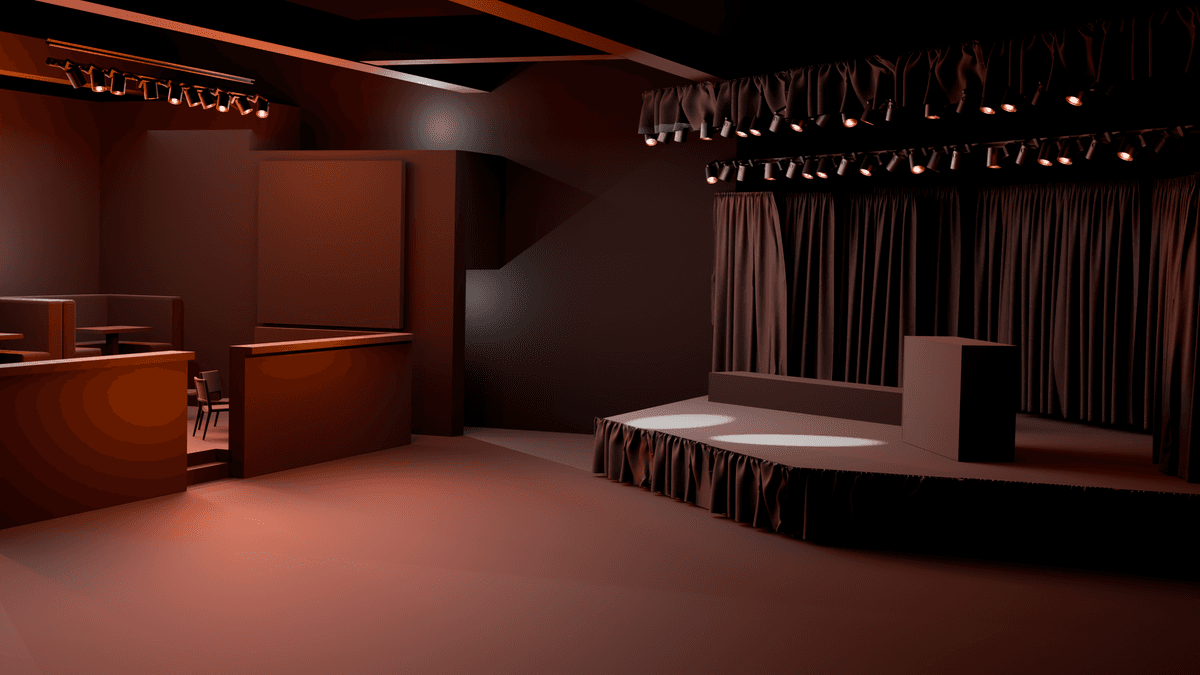
Blank Canvas or Built-In Character? Choosing the Right Space for a Brand Experience
Why the right space can make—or break—a brand experience.
October 6, 20266 min read
Why the right space can make—or break—a brand experience.
Every brand experience has to happen somewhere.
Sometimes that somewhere is four white walls and a concrete floor. Sometimes it’s a bar with a stage, a kitchen, a weird back room and an entrance you wish were six feet to the left.
Neither is inherently better.
The trick is knowing which one gives the idea what it needs to become something great.
For Selena Hoover, VP of Operations at Trigger(House, that decision starts well before anyone starts talking about paint colors or where the photo moment goes.
“A lot of these projects are venue-first,” Selena says. “We spend a lot of time working with our clients on where it’s happening versus how it comes to life. We really push the importance of finding the space and then building the experience from the space out.”
There’s an obvious appeal to a blank canvas: freedom.
A white box gives creative teams the ability to dictate the environment rather than inherit it. Walls can go where walls need to go. A huge room can become a series of intimate ones. Guest flow can be designed around the experience instead of an existing floor plan.
“You can build the consumer flow and the experience flow to your liking,” Selena says, “versus having to work with, ‘Here’s the entrance. Here’s the bar.’ When you’re starting with a blank slate, anything’s possible.”
Anything, of course, comes with an asterisk.
Because that beautiful empty room is exactly that: empty.
“Anything’s possible, but that doesn’t mean everything can get done,” Selena says. “You have to consider the financial investment in building out a space that comes with nothing.”
Power. Lighting. Audio. Catering. Restrooms. Staffing. Furniture. Walls. Flooring. Every blank canvas comes with a list of things that aren’t there yet, and every one of them has implications for budget, schedule and production.
Still, there are plenty of times when starting from scratch is actually the more practical choice.
For our recent Temptations Cat Bodega in New York City, taking over a real bodega initially seemed like the obvious answer. The shelves are already there. The coolers are already there. It already looks like a bodega because, well, it is one.
But then reality gets involved.
“We would have had to clear out all of its shelves and backstock and essentially make it a blank space for us to start from anyway,” Selena says. “Where do we store all that stuff? That costs money. That takes labor and time.”
There was another consideration, too: bodegas are neighborhood resources. Closing one down for a brand activation meant temporarily taking something useful away from the people who rely on it.
So we found an empty space instead—and built exactly the bodega we needed.
“We could do what we wanted,” Selena says. “We could find a space small enough that we could do big things in without taking over a large bodega and having to retrofit into it.”
Sometimes the blank box gives you more freedom. Sometimes it saves you from spending a lot of time and money turning an existing space into a blank box, only to start over from square one once you get to that point.
Then there are projects where rebuilding what already exists makes absolutely no sense.
For a recent Brooks event in New York, more than 100 guests joined musician Dermot Kennedy for a 5K run before returning for a private live performance. That meant we needed room for runners before and after the race, food and beverage service, a stage, audio and the infrastructure to support a live show.
We could have built all of that.
Or we could find somewhere that already had it.
“We steered the client toward a beer hall—a big open space that had an existing stage, existing audio and food right on site,” Selena says. “It was a two-for-one special for the client.”
Better yet, the character of the venue worked creatively, too. Its pub-like atmosphere complemented Kennedy’s Irish roots while solving a long list of operational needs in one shot.
That’s the upside of the right existing venue: sometimes the things you inherit aren’t compromises. They’re assets.
Multiple restrooms, kitchens, lighting systems, stages, audio equipment and even experienced technical staff may already be waiting for you. Instead of wasting budget recreating those necessities, you can put those resources somewhere guests will actually notice.
And existing spaces can give you something else that’s much harder to order from a vendor: character.
Existing spaces rarely behave exactly the way they did on a floor plan.
That’s why Selena is a big believer in getting the people shaping the experience into the actual room.
“You can put so many plans down on paper, but when you’re there in person and you feel the flow, you walk it yourself and walk through the user experience you’ve put on paper, you may want to tweak a few things.”
Sometimes those tweaks solve problems. Other times, walking the space reveals opportunities nobody knew existed.
“We’ve turned what was basically a storage closet into a photo experience,” Selena says. “We’ve turned a break room in the back of a space into a hidden room that became another user-generated photo experience. If you plan it right, you can use almost every space you walk into in really unique ways.”
The same goes for technology. Some newer white box venues now come equipped with projection mapping and other built-in capabilities that can replace tens of thousands of dollars’ worth of physical graphics while opening up creative possibilities that weren’t part of the original plan.
The lesson isn’t to fight the room.
It’s to pay attention to it.
Of course, choosing an existing venue comes with another challenge: making people forget what it used to be.
A logo above the bar isn’t a transformation.
“If you go into a bar and put your brand’s logo up on the wall, that’s just a brand’s logo on a wall,” Selena says. “But when you transform through a threshold and you’re transported into a whole other world, that’s full immersion. That’s a full transformation.”
Getting there means understanding the brand deeply enough that the experience feels like an expression of it, not a layer of vinyl graphics applied to someone else’s room.
And the same principle applies to a white box. Filling an empty room doesn’t mean filling every square inch with branding.
“It doesn’t have to be your logo everywhere,” Selena says. “It’s creating a really authentic environment that reflects the brand, the event and the style or theme you’re trying to bring to life.”
Whether the room starts with nothing or comes with decades of its own personality, the goal is the same: when guests cross that threshold, the world on the other side should feel intentional.
Sorry. There isn’t a formula.
The right answer changes with the idea, the audience, the city, the headcount, the infrastructure, the budget and about 100 other things.
And some of the assumptions that seem obvious at first don’t survive a closer look.
“Clients can think one thing will be cheaper than the other, or that one will be logistically easier,” Selena says. “Sometimes logistics and finances are tied together.”
An existing venue may save a fortune in infrastructure—or cost a fortune to close, empty and transform. A white box may demand that everything be brought in—or give the team the freedom to build exactly what’s needed without spending money undoing what’s already there.
That’s why we weigh both. Sometimes we find a third option nobody had considered.
Because the real question isn’t whether it’s better to start with nothing or work with what you’ve got.
It’s what the idea needs, what the guests need, and what gives us the best opportunity to make the experience work.
Find that space first.
Then make it something nobody saw coming.